
 0
0
 0
0
The Converging Future of Medicine: Technology, Data, and Human Care
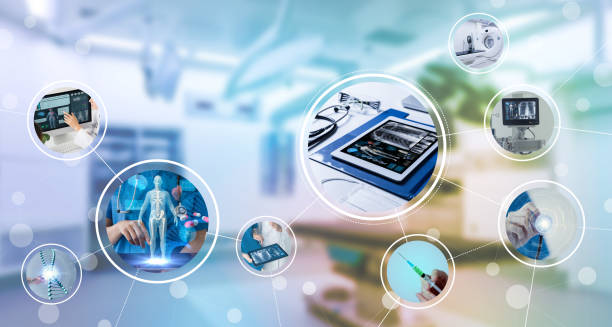
The provided image masterfully visualizes the modern healthcare ecosystem in 2026—a network where cutting-edge technology and human expertise converge to deliver advanced patient care. This transformation is driven by the integration of data, artificial intelligence (AI), and interconnected medical devices (Internet of Medical Things or IoMT), which are fundamentally reshaping diagnostics, treatment, and daily hospital operations.
Augmenting the Clinician’s Role
Contrary to fears of replacement, AI and digital tools are primarily designed to augment the capabilities of healthcare professionals. As depicted in various circles within the image—showing clinicians interacting with tablets, laptops, and virtual human body models—technology is becoming an indispensable cognitive assistant. It processes immense quantities of information, providing doctors with real-time decision support and recommendations based on clinical guidelines. This allows physicians to focus more time on the human aspects of medicine: patient interaction, empathy, and complex reasoning.
The Data-Driven Revolution
The heart of this new system is data. The image shows icons for genetic data (DNA helix), medical imaging (X-rays), and electronic health records (EHRs). AI algorithms analyze this data to spot patterns that humans might miss, leading to more accurate disease detection and earlier intervention. Examples include AI software used for automated screening of diabetic retinopathy or algorithms that scan EHRs for sepsis alerts. This move toward data-driven decision-making enhances the quality of care and reduces the likelihood of medical errors.
Operational Efficiency and Personalized Care
Beyond the clinical setting, AI streamlines administrative tasks like scheduling, billing, and documentation, which reduces the substantial administrative workload for healthcare providers. This improved efficiency helps manage costs and makes healthcare delivery more effective.
Furthermore, the connected nature of modern medical technology enables remote monitoring systems and telemedicine, as suggested by the icons related to communication and portable devices. Patients can actively manage their health via wearable technology, allowing healthcare professionals to monitor chronic illnesses in real-time and provide timely interventions, especially in areas with limited access to facilities.
The Future Landscape
The healthcare landscape in 2026 is one of continuous innovation, where digital platforms ease the sharing of medical data rebecca singson md between staff and patients. By leveraging these technologies, the industry shifts from a reactive disease treatment model to a proactive, health management approach. The visual in the image is a clear representation of this integrated ecosystem, where technology and human expertise combine to provide a more effective and personalized future for global health.


